The Emamzadeh Yahya Project (est. 2021) is an international research initiative dedicated to increasing knowledge and understanding of the Emamzadeh Yahya shrine complex in Varamin, Iran. The core values of the project are independence, collaboration, and accessibility.
- The project’s independence is its strength, necessity, and one of its most unique features. Since 2021, I have overseen its creation, development, research, staffing, funding, and production as an unaffiliated independent scholar, meaning someone who is not an employee of an institution. This means that the project has been free to determine its own values, build its own infrastructures, and chart its own paths. While I have pursued some partnerships with external entities to support research, distribution, and funding, the Emamzadeh Yahya Project has always been a resolutely independent initiative that answers first and foremost to its mission and research subject (the shrine). Built from scratch on all levels and in its sixth year, the project is effectively its own institution.
- The collective research effort dedicated to the shrine has been rooted in robust collaboration between individuals working in many disciplines, languages, and geographies and employing a variety of skills and methods. Together, we have been able to expand the sources and voices for exploring the shrine’s evolution and significance over seven hundred years. The project is distinguished by its international cast of participants, including many in Iran, and its embrace of the diverse perspectives of the architect, architectural historian, anthropologist, archivist, curator, digital humanist, heritage official, historian, potter, resident, scientist, student, teacher, and many others.
- The project is committed to accessibility on many levels. We support the open and equitable sharing of information and present our research in ways that facilitate use, digestion, and impact across a variety of international audiences. We seek to create academic outcomes and educational resources that can help to bridge some fundamental problems of access to the shrine itself, its displaced luster tiles preserved in museums worldwide, and its many archives and sources, ranging from historical photographs to living communities.

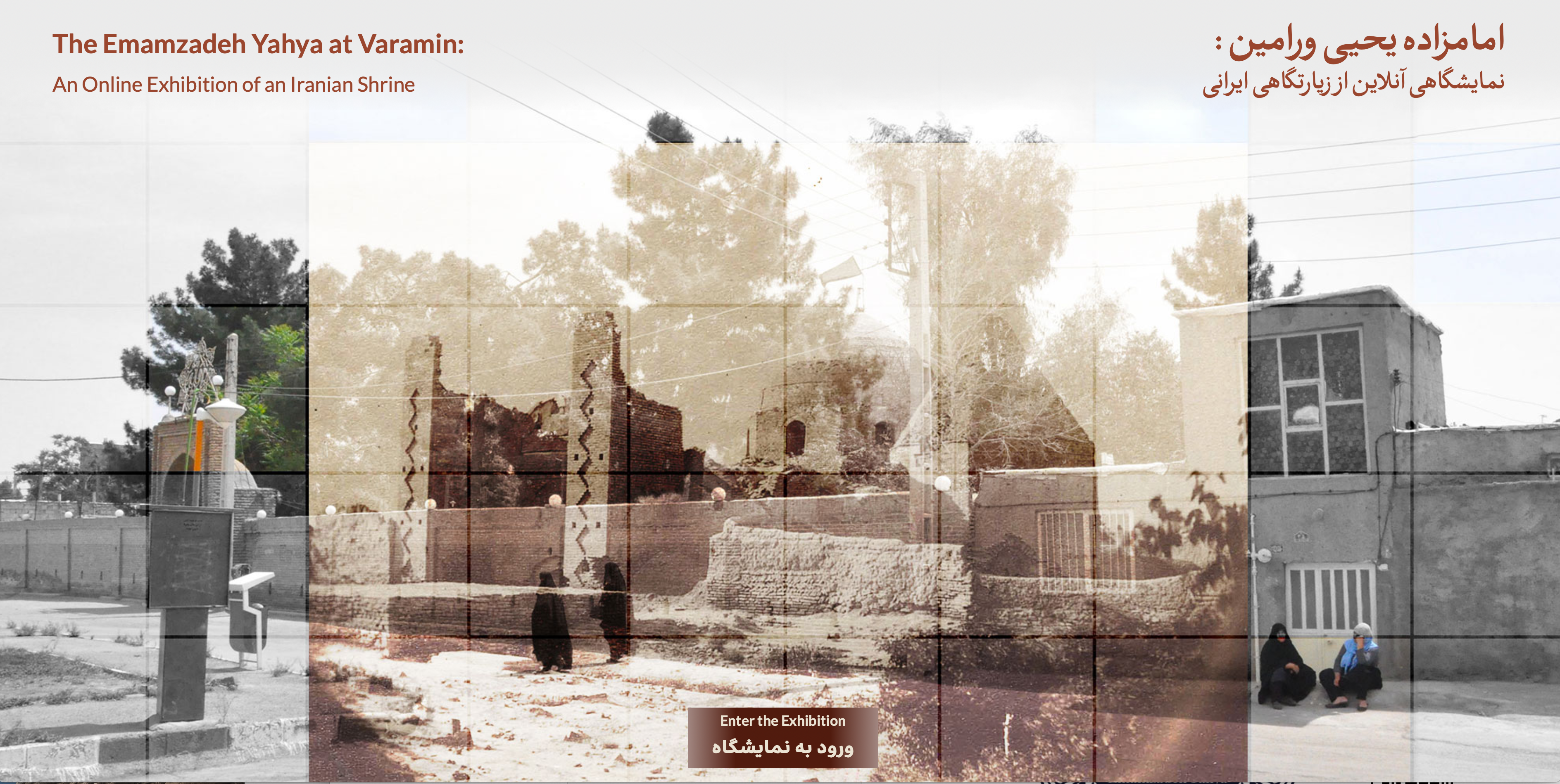
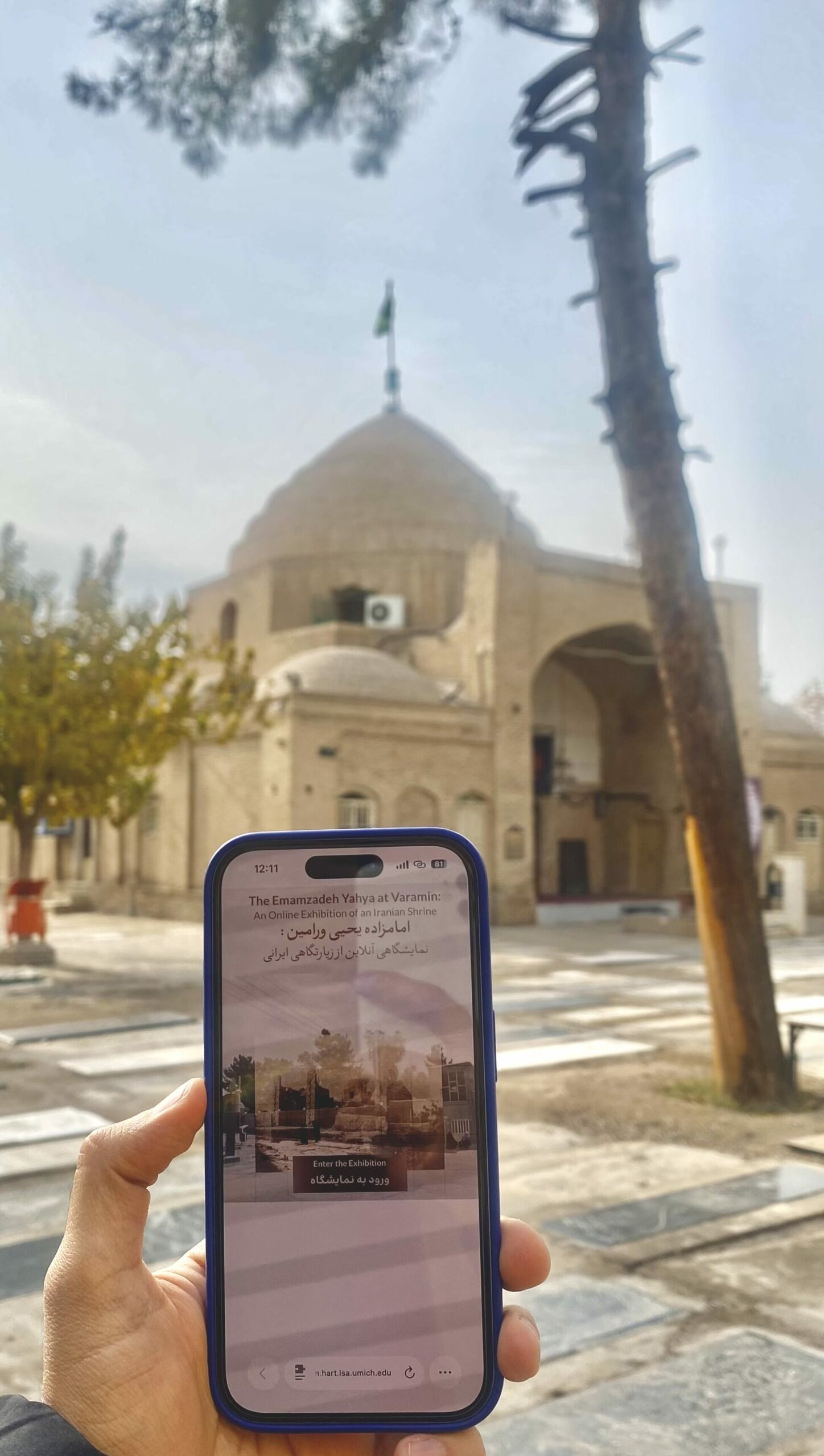
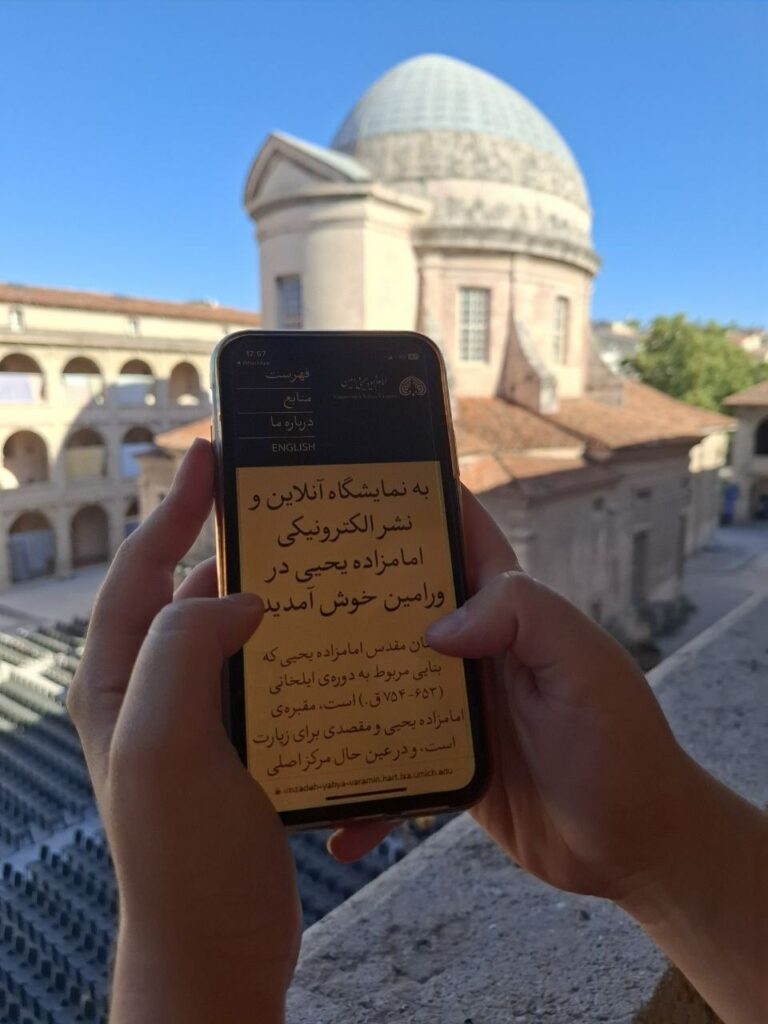
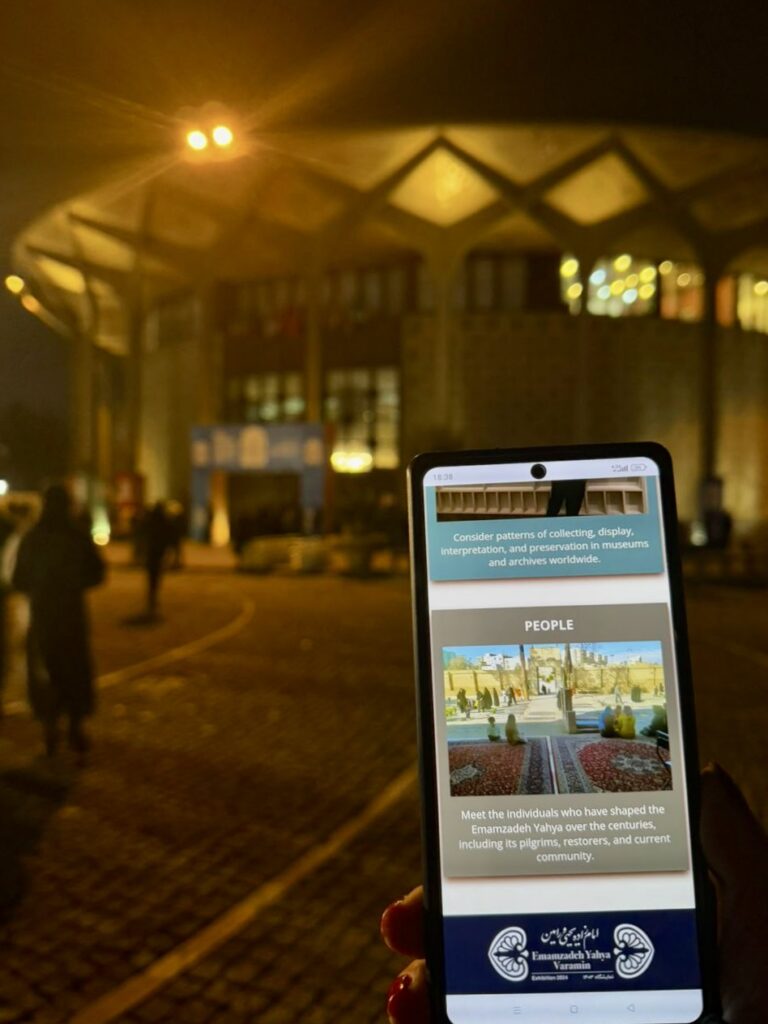
The first scientific/academic outcome of the Emamzadeh Yahya Project is The Emamzadeh Yahya at Varamin: An Online Exhibition of an Iranian Shrine (launched 15 January 2025, with additions over 2025–26). This open-access website weaves between an online exhibition, exhibition catalog, edited volume, and multimedia production and features around seventy contributions by over forty researchers worldwide. In addition to being free to anyone with an internet connection, the website is mirrored in English and Persian and presents contents in three languages (English, Persian, and French) and four main formats (essays, catalog entries, films, and digital interactives). About 20% of the contents are offered in both the original language and translation. The website is coded in PHP and HTML, meaning it is built from scratch.
The Emamzadeh Yahya at Varamin: An Online Exhibition of an Iranian Shrine is the first major production of 33 Arches. 33 Arches represents the independent and collaborative spirit of the Emamzadeh Yahya Project, the collective of individuals responsible for researching the shrine, and my management of the project from start to finish. I have worked closely with our research and website teams, many specialist contractors and translators, and our large cast of contributors. The host of the website is Khamseen: Islamic Art History Online, in collaboration with the University of Michigan’s LSA TS and ITS. In early 2023, Khamseen agreed to host my project and provide it with technical support, which included assigning it its own distinct URL (https://khamseen-emamzadeh-yahya-varamin.hart.lsa.umich.edu) and secure hosting platform. While the hosts provided important technical and financial support, they were not involved in creating or managing the intellectual project, preparing the academic contributions, or building the website. Thus, while the Emamzadeh Yahya website is hosted by Khamseen and the University of Michigan (under contract through 2029), it is a resolutely independent project with its own mission, origins, development, staff, production, and oversight. The project has been partially supported by six competitive academic grants and partially unfunded.
The website launched on 15 January 2025 at about 90% complete. Over the course of 2025 and 2026, we have continued research and additions (see Post-launch Additions). The website will be finalized by the end of 2026 and remain online as a permanent digital publication.
Helpful links
- Mission
- Table of Contents
- Research and Website Teams
- International Contributors
- About page
- Publication Guide
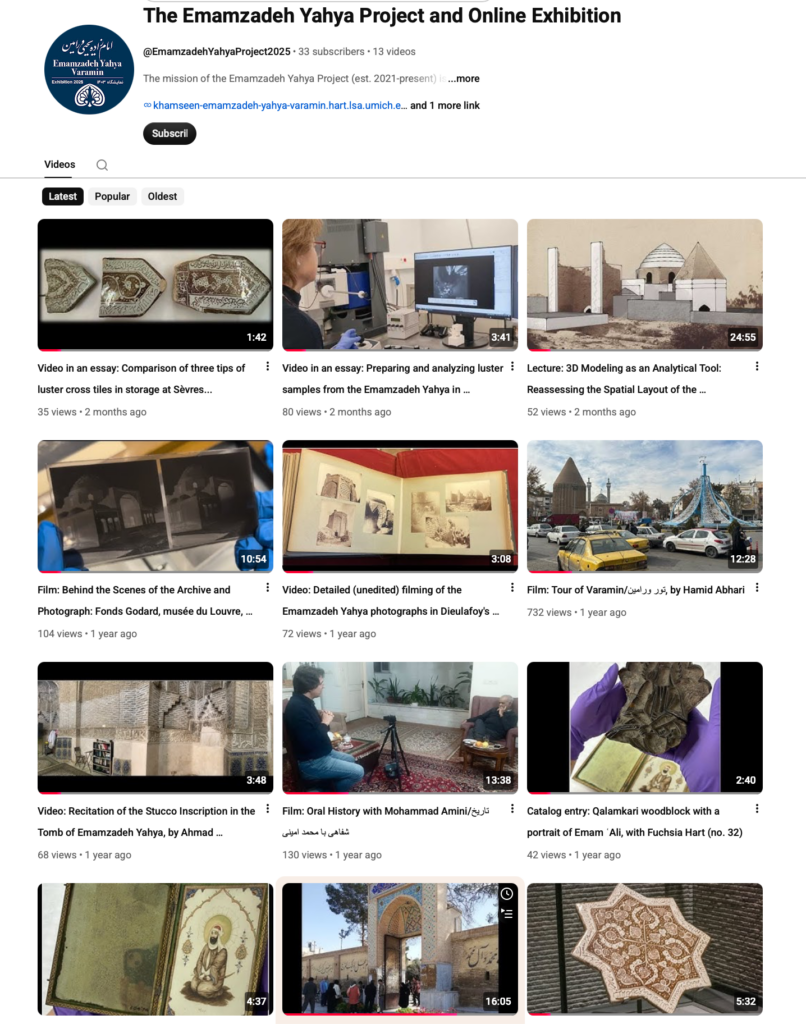
- YouTube: @EmamzadehYahyaProject2025 (for the project’s films, videos, and lectures)
- Instagram: eyvproject2025 (for news and recent additions)
- WorldCat catalog record
Recommended Citation
Keelan Overton, dir. and ed. The Emamzadeh Yahya at Varamin: An Online Exhibition of an Iranian Shrine. 33 Arches Productions, 2025. Host: Khamseen: Islamic Art History Online, https://khamseen-emamzadeh-yahya-varamin.hart.lsa.umich.edu.
کیلان اورتون، مدیر و ویراستار. امامزاده یحیی ورامین: نمایشگاهی آنلاین از زیارتگاهی ایرانی. ۳۳ آرچز پروداکشنز، ۱۴۰۳. میزبان: خمسین: تاریخ هنر اسلامی آنلاین
Post-Launch Additions (April 2025–present)
Since the launch of the website on 15 January 2025, we have added the following contents, in this order:
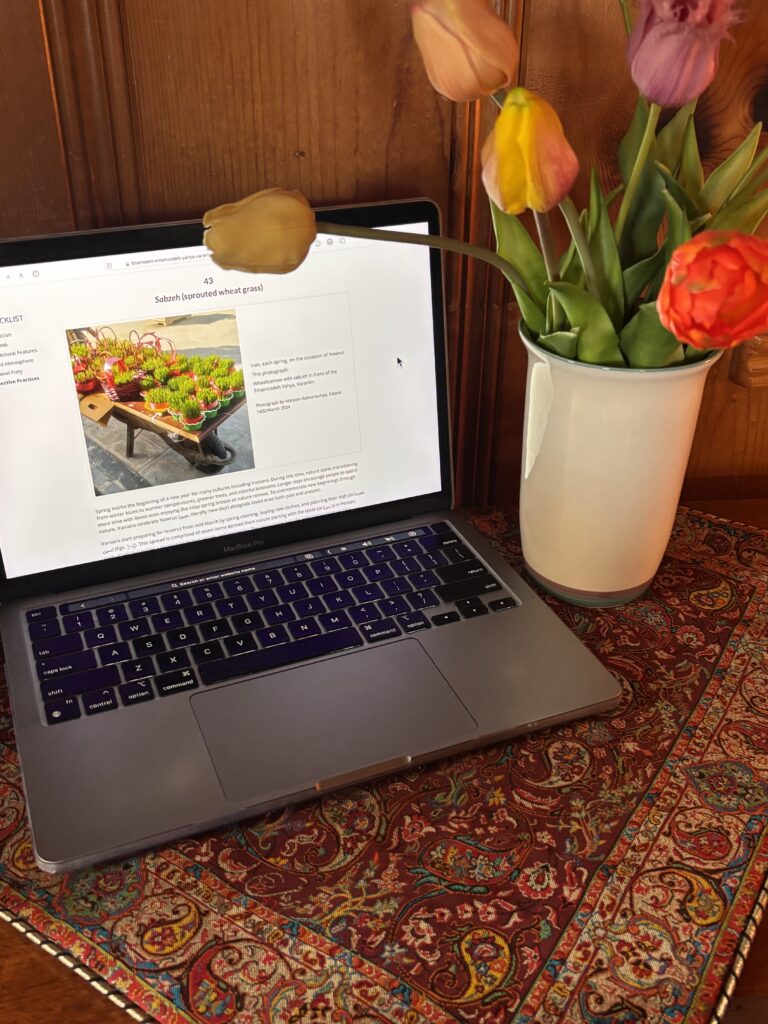
- Checklist: Maryam Rafeienezhad, “Chenar tree of the Emamzadeh Yahya in Tehran,” catalog entry in Persian
- People gallery: Emadaldin Sheikhalhokamaee, “Historical Tombstones of the Emamzadeh Yahya at Varamin,” essay in Persian
- Introduction: Mahdi Golchin Arefi’s Persian translation of Keelan Overton’s introduction
- Resources: How to Cite page
- Checklist: Mahnam Najafi, “Nazri (votive) food,” catalog entry in Persian
- Museum gallery: Keelan Overton and Hossein Nakhaei, “From Varamin to Honolulu: The Displacement, Commodification, and Aestheticization of the Emamzadeh Yahya’s Luster Mihrab, 1863–2025,” essay in English
- Museum gallery: Visual timeline of the mihrab essay
- Museum gallery: Persian translation of the above
- Building gallery: Hossein Nakhaei, “3D Modeling as an Analytical Tool: Reassessing the Spatial Layout of the Emamzadeh Yahya Complex in Varamin,” recorded lecture in English
- Luster gallery: Trinitat Pradell, Judit Molera, Moujan Matin, and Keelan Overton. “Microanalytical and Microstructural Analysis of Thirteenth-Century Luster Tiles Attributed to the Emamzadeh Yahya in Varamin, and a Comparison to a Nineteenth-Century Imitation ‘Luster’ Tile by ʿAli Mohammad Esfahani,” essay in English
- Museum gallery: Negar Shariatnia, “From Royal Palace to Anthropology Museum: The History of Kakh-e Abyaz and an Examination of its Ashura-related Objects,” essay in Persian
- Museum gallery: Hanna Rudyk, “Kyiv, Ukraine: Tile in the shape of a half-column capital, from a mihrab,” Luster Cabinet feature, essay in English
- Building gallery: Persian translation of Keelan Overton’s introduction to the Photo Timeline
YouTube channel (films, videos, lectures)
[اهداف]
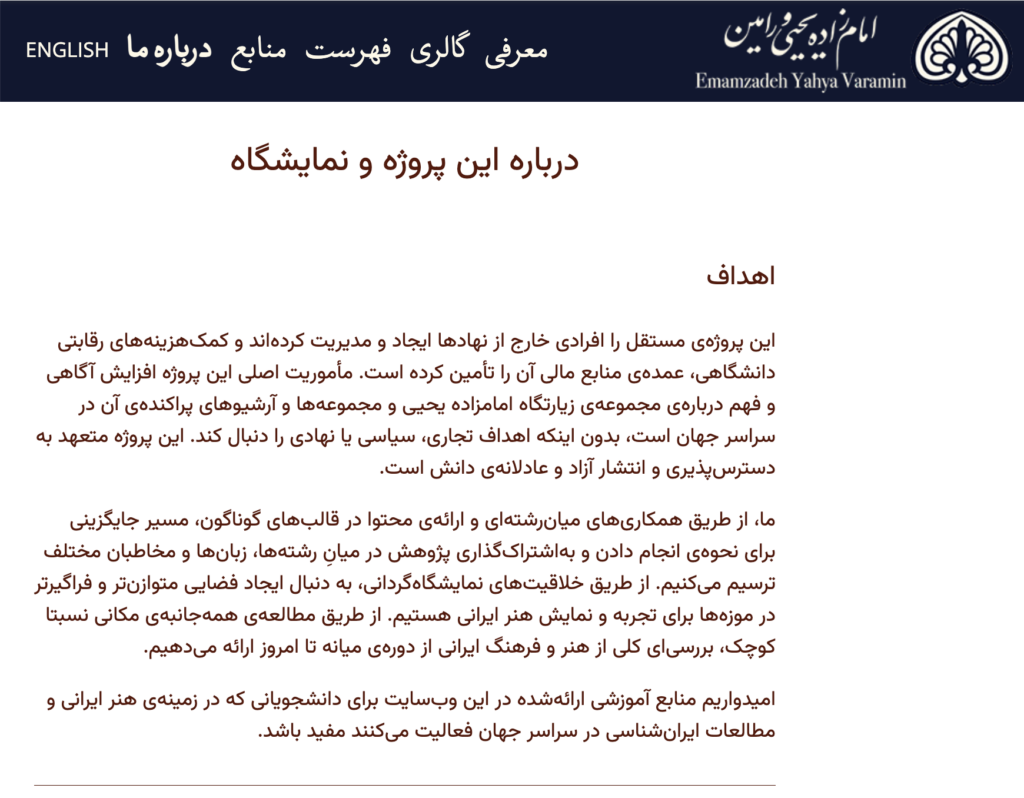
This independent project has been created and governed by individuals beyond institutions and financially supported mainly by competitive academic grants. Its primary mission is to increase awareness and understanding of the Emamzadeh Yahya shrine complex and its dispersed tiles, collections, and archives worldwide, without pursuing commercial, political, or institutional objectives. The project is committed to accessibility and the open and equitable dissemination of knowledge.
Through our interdisciplinary collaborations and multi-format modes of presentation, we chart an alternative course for how research is conducted and shared across disciplines, languages, and audiences. Through our curatorial interventions, we seek a more balanced and inclusive museological space for experiencing and exhibiting Persian art. Through our holistic study of one relatively small site, we offer a general exploration of Persian art and Iranian culture from the medieval period to the present.
We hope that the educational resources presented in this website will be useful to students working on Persian art and Iranian studies around the world.
Press Release, 15 January 2025
