Keelan Overton, PhD
Independent Scholar & Historian of Art and Architecture
Director of the Emamzadeh Yahya Project (2021–present)
Founder, 33 Arches
Education
- PhD, Art History, University of California, Los Angeles, 2011
- Dissertation: “A Collector and His Portrait: Book Arts and Painting for Ibrahim ‘Adil Shah II of Bijapur (r. 1580–1627).” Committee: Irene Bierman-McKinney, Robert Brown, Saloni Mathur, Sanjay Subrahmanyam (history), Marianna Shreve Simpson (external reader)
- MA, History of Art, Williams College, 2004
- BA, Art History, James Madison University, 2001
- 9/1997–12/1999: American University (Division I athletic scholarship)
- spring 1999: The American University of Paris
Research interests
- Iran, India, Persian, Persianate, Indo-Persian, Deccan, South Asia, Central Asia, Indian Ocean
- Historiography, museology, collecting, and display in the generalist field of ‘Islamic art’
- Cultural heritage of Iran
- Persian architecture and tilework
- Iranian shrines and material cultures
- Migration, mobility, and cultural flow between Iran and India
- Deccani art and architecture, especially sultanate Bijapur
- Methods: interdisciplinarity, diachronic history, transcultural, present history, collaboration, alternative museology
Fellowships, Grants & Awards (since 2016)
- Clark Fellow, Clark Art Institute, Williamstown, Massachusetts, fall 2025 (residential)
- Research grant, Soudavar Memorial Foundation, 2025
- Invited researcher, Institut nationald’histoire de l’art (INHA), Paris, spring 2024 (residential)
- A.3 Barakat Major Award, The Barakat Trust, 2024-25 [podcast]
- Arts Research: Incubation & Acceleration grant, University of Michigan, 2024
- Werner Mark Linz Memorial Grant, Gingko, 2024
- Research grant, Persian Heritage Foundation, 2023
- Seed Grant, Department of Art History, University of Michigan, 2023
- Getty Scholar, Getty Research Institute, Los Angeles, CA, fall 2021 (residential)
- Publication grant, Persian Heritage Foundation, 2019
- Millard Meiss Publication Fund, College Art Association, 2019
- Visiting Fellow, Centre for Anatolian and East Mediterranean Studies, University of St Andrews, May 2018 (to research the library’s Persian-Deccani Qur’an manuscript)
- Visiting Scholar, University of St Andrews Library, July–August 2016 (same as above)
Professional Experience (select)
- Founder of 33 Arches (2024–present): Santa Barbara/Carpinteria, California
- Independent Scholar (July 2015–present): Santa Barbara/Carpinteria, California
- Director of the Emamzadeh Yahya Project (2021–present): creator of the independent, international, and interdiciplinary research project; researcher and lead contributor; developer of outcomes and partnerships
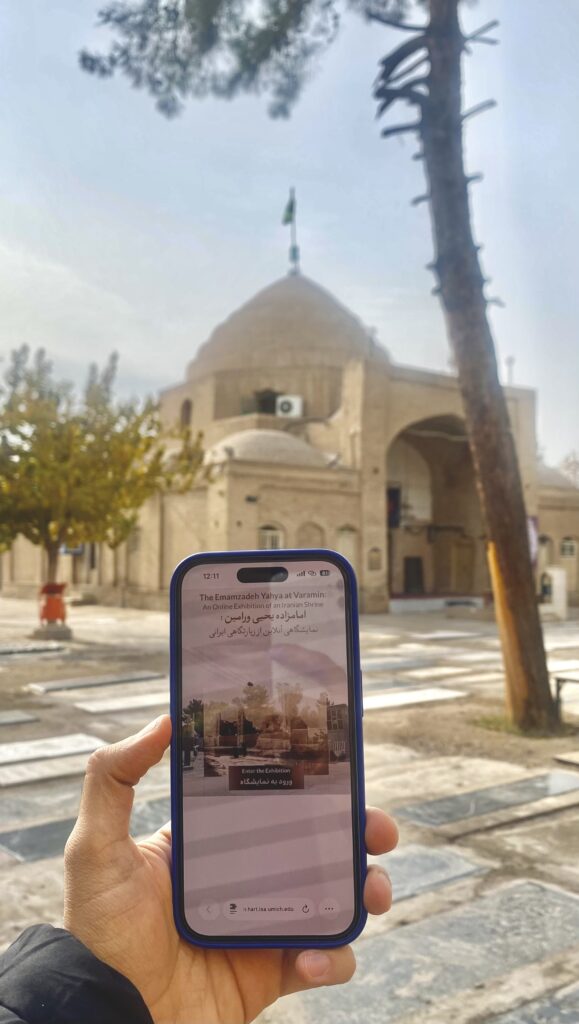
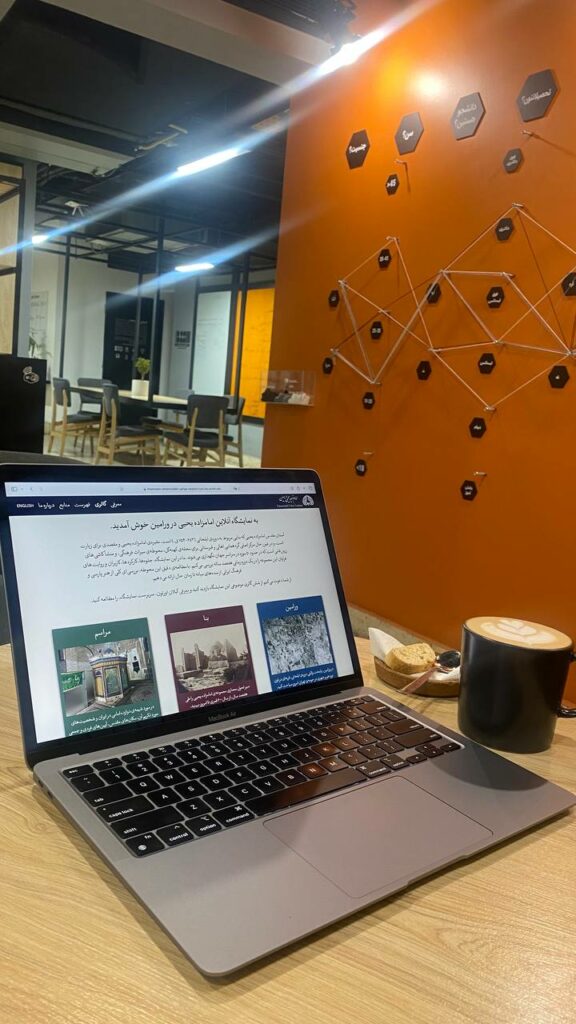
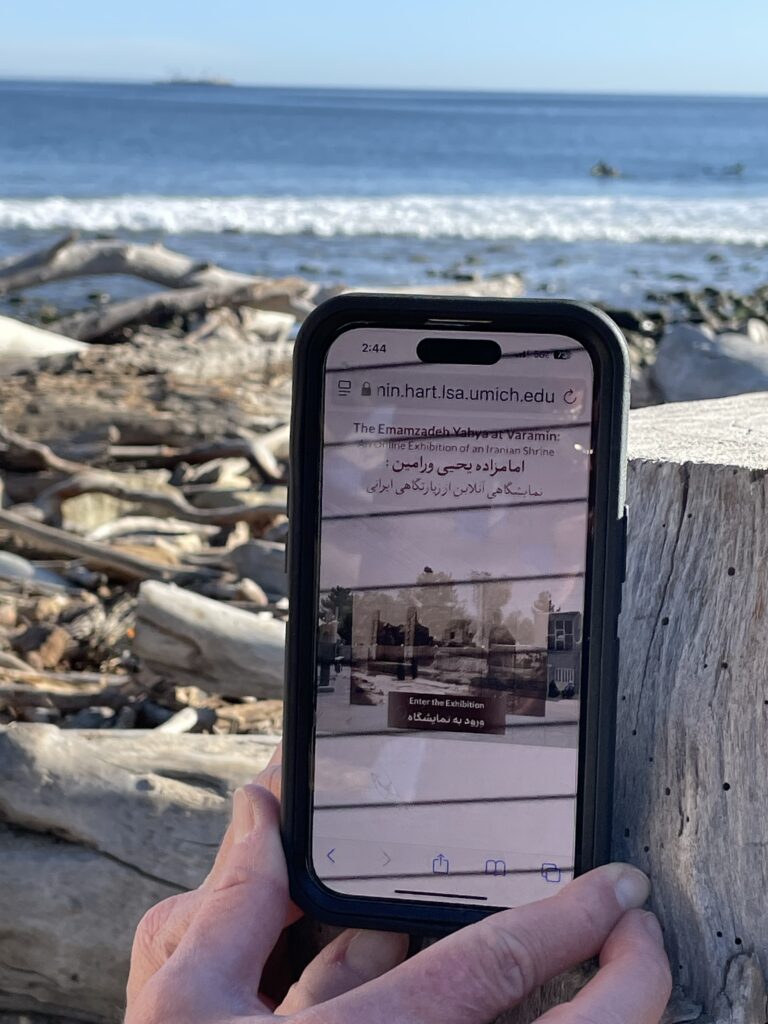
- Curator, Editor, Producer, and Publisher of The Emamzadeh Yahya at Varamin: An Online Exhibition of an Iranian Shrine (33 Arches Productions, 2025; hosted by Khamseen: Islamic Art History Online, in collaboration with the University of Michigan): editor of all contributions; curator of the online exhibition; publisher of the academic contents; producer of the website; manager of translation efforts and additional editorial needs in Persian and French; English copyeditor; grant writer and securer of funding; builder and manager of teams and contractors; general project administrator
- Consultant in Architectural Photography, Getty Research Institute, Los Angeles, 2025: site identifications and descriptions for 900+ glass plates in the Henry René d’Allemagne collection
- Adjunct/fixed-term Lecturer in Art History or History (intermittent, 2015–23): University of California Los Angeles, University of California Santa Barbara, Pomona College, Occidental College (for a complete list of courses, click here)
- Associate Curator of Islamic Art, Art of the Middle East Department, Los Angeles County Museum of Art, June 2014–July 2015
- Curator of Islamic Art, Doris Duke Foundation for Islamic Art / Shangri La, Honolulu, June 2011–November 2012
I am a historian of art and architecture who works on areas of the Persian and Persianate worlds, mainly in modern-day Iran and India, from the medieval period to the present. I approach visual culture broadly—urbanism, architecture, material culture, tilework, arts of the book, craft industries, archival photography and film—and ideally from an interdisciplinary lens. My research projects and publications have explored patterns of collecting and museology in the generalist field of ‘Islamic art,’ life histories of manuscripts and buildings, Indo-Persian cultural relations, the Deccan sultanate of Bijapur, and most recently, the Emamzadeh Yahya shrine complex at Varamin.
Since summer 2015, I have been an independent scholar based in Santa Barbara/Carpinteria, California, where I have divided my time between research, writing, editing, project management, teaching, consulting, and travel. My recent scholarly work has been supported by residential fellowships at the Clark Art Institute in Williamstown, MA (fall 2025), Institut national d’histoire de l’art (INHA) in Paris (spring 2024), and Getty Research Institute in Los Angeles (fall 2021), as well as project grants from the Soudavar Foundation, Barakat Trust, Gingko, Persian Heritage Foundation, and University of Michigan. I have also taught at the University of California, Los Angeles (UCLA), University of California, Santa Barbara (UCSB), Pomona College, and Occidental College and led cultural tours for museums to Iran, Morocco, Armenia, and Georgia. Before moving to Santa Barbara, I held two museum positions: Associate Curator in the Art of the Middle East department at the Los Angeles County Museum of Art (2014–15) and Curator of Islamic Art at the Doris Duke Foundation for Islamic Art (Shangri La) in Honolulu (2011–12).
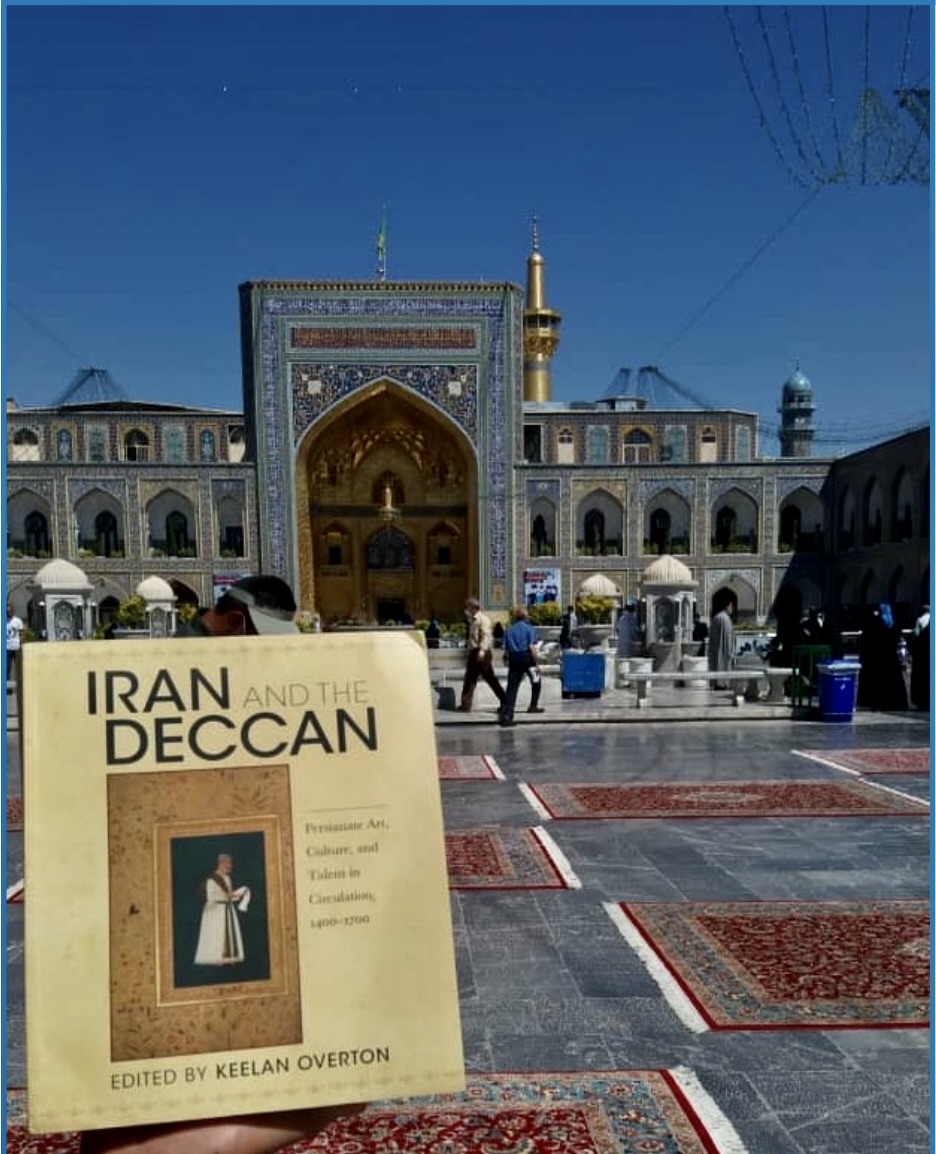
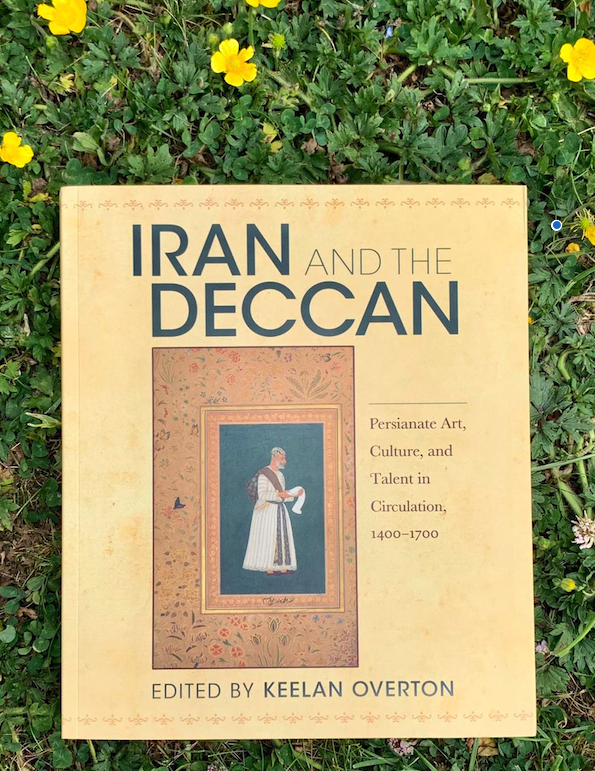
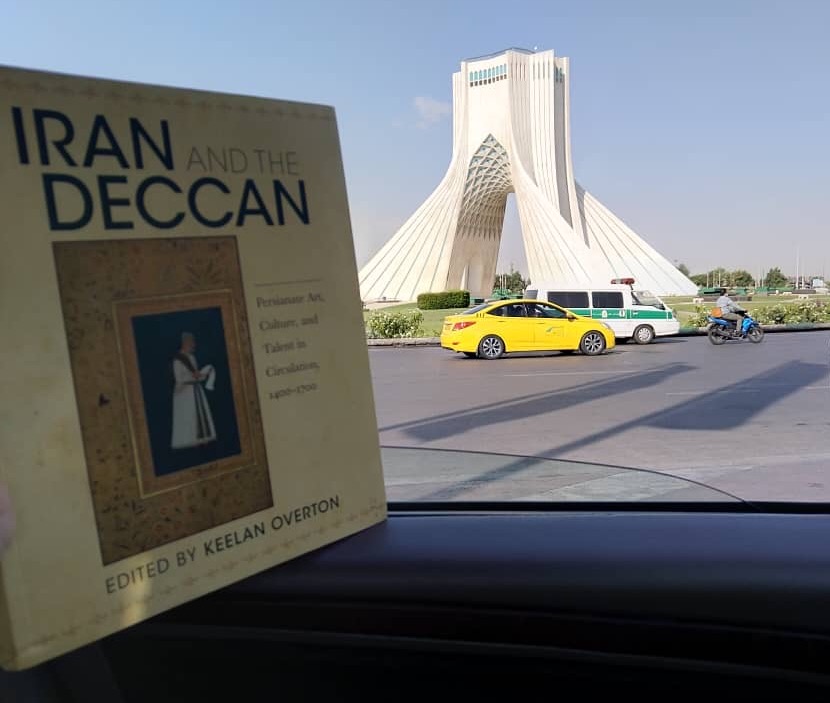
Since 2015, I have led two major interdisciplinary projects. The first emerged out of my 2011 UCLA dissertation on book arts, painting, and collecting at the Bijapur court of Ibrahim ‘Adil Shah II (r. 1580-1627). Instead of transforming my dissertation into a monograph, I published individual articles and developed an edited volume. Iran and the Deccan: Persianate Art, Culture, and Talent in Circulation, 1400–1700 includes 14 essays by 18 scholars and was published by Indiana University Press in June 2020.
The second project focuses on the Emamzadeh Yahya shrine complex in Varamin, Iran. In early 2021, soon after publishing a co-authored article on the shrine with Kimia Maleki, I began planning a larger international project aimed at increasing understanding of the site across disciplines, temporalities, perspectives, and audiences. For about two years, I worked on developing the independent project’s intellectual vision, methods, contents, and participants. By summer 2021, I had a list of seven main goals to be achieved through two main methods: diachronic history and interdisciplinarity. I had also honed in on the concept of a “virtual exhibition” to be presented online. The non-physical exhibition would offer an alternative museological space for exploring the Emamzadeh Yahya–one that prioritized a holistic understanding of the shrine itself and was free from some of the institutional interests that have shaped the collecting and display of its displaced tiles. The online (website) format would further ensure that the exhibition experience and related scholarship (aka ‘the book’) would be available to anyone with internet, including and especially audiences in Iran. Many valuable lessons had been learned from the Iran and the Deccan book, including the limitations of print and certain forms of academic distribution and exclusion.
In summer 2022, I began approaching institutions to host my project and provide it with technical support. In early 2023, Khamseen: Islamic Art History Online, in collaboration with the University of Michigan, agreed to host my project and provide it with technical support, which included assigning it its own distinct URL (https://khamseen-emamzadeh-yahya-varamin.hart.lsa.umich.edu) and secure hosting platform. While the hosts provided important technical and financial support, they were not involved in creating or managing the intellectual project, preparing the academic contributions, or building the website. Thus, while the Emamzadeh Yahya website is hosted by Khamseen and the University of Michigan (under contract through 2029), it is a resolutely independent project with its own mission, origins, development, staff, production, and oversight. The project has been partially supported by six competitive academic grants and partially unfunded.
Over the course of this six-year project, my work has followed five main paths: managing all aspects of the project from concept to delivery, researching the shrine and its archives, writing and creating my own contributions, editing and preparing the contributions of others, and building and populating the website. I assembled and worked closely with two small teams: an interdisciplinary research team focused on the shrine and Varamin and a production team responsible for the academic contents and website, alongside many specialist contractors. As a researcher, I studied archives and collections in Europe and North America and collaborated with all members of our research team on distinct topics and needs. As a contributor, I wrote essays and texts of various lengths (2,000-60,000 words) while branching out into new formats like film, digital interactives, and custom-built features. As the curator, I identified and commissioned topics for inclusion while developing the galleries and checklist, two distinct yet interrelated tasks. As the editor and publisher, I created the publication systems and shepherded the work of over forty contributors through all stages of publication. This included providing many rounds of developmental editing and feedback to each contributor, soliciting peer reviews, designing layouts, copyediting all English materials, delegating English proofreading, delegating Persian and French line editing and copyediting, overseeing translation efforts, and directing video editors. As the producer of the website, I worked closely with a small group of collaborators and designers to create the website’s design and style (fonts, logos, colors, visuals, music), prepared all materials for the web designer’s coding, and directed all corrections and adjustments. As the project’s general manager, I oversaw all administration, including staffing, funding, and marketing.
The Emamzadeh Yahya at Varamin: An Online Exhibition of an Iranian Shrine launched on 15 January 2025 and is an online exhibition, exhibition catalog, academic edited volume, and multi-media production all in one. The website is mirrored in English and Persian and includes about seventy contributions in three languages (English, Persian, and French) and four main formats (essays, catalog entries, films, and digital interactives). At the time of launch, the website was about 90% complete, and about 20% of the contents were available in translation. Over the course of 2025 and 2026, we have steadily added contributions that required more research and time (see Post-launch Additions). The website will be finalized in 2026 and remain online permanently.
The Emamzadeh Yahya website is the first major production of my academic studio 33 Arches.
A major task and challenge of this independent project was securing funding to support the preparation of the academic contents and creation of the website, as well as my own scholarly work and additional labor as the project manager, editor, publisher, and producer. Over the course of the six-year effort, I was personally supported by three residential fellowships totaling about ten months (Getty Research Institute/2021, INHA Paris/2024, and Clark Art Institute/2025). From 2023 onward, I secured six project grants from five distinct sources: University of Michigan, Persian Heritage Foundation, Gingko, The Barakat Trust, and Soudavar Foundation. This funding supported needs such as translation, web design, copyediting, research, and curatorial assistance and accounted for about 25% of the actual required labor and costs. In sum, while aspects of the project were generously supported by many institutions, others were significantly underfunded.
For further information, click here.